
On Tuesday, an extraordinary trial took place at the Almelo District Court, attracting attention not only from a legal but also from a social perspective.
The focus was on the Centraal Orgaan opvang asielzoekers (COA) – the Dutch agency for the accommodation of asylum seekers – and an Afghan family with eight minor children who currently live in an asylum seeker center in Almelo.
Background of the case
The family, consisting of a father, mother, and eight children, received a temporary residence permit in the summer of the previous year . This gave them the right to move out of the asylum center and into regular accommodation.
In August 2022, a so-called "huisvestingsgesprek " (housing discussion) took place between the family and the COA. It was made clear that every recognized family receives a one-time housing offer, which they are obligated to accept. According to the COA, the family did not express any criteria or special requests at that time.
Continued on the next page 
The housing offer
In November 2022, the COA offered the family spacious accommodation in the municipality of Tholen. The authority emphasized that this house met all requirements – in terms of size, location, and standard.
However, in early February 2023, it became clear that the family had rejected the offer. Several discussions followed, in which the COA stated that the refusal was unfounded. Since the family continued to remain in the asylum center, the authorities initiated eviction proceedings – a first for the COA.
Continued on the next page
The reason for the refusal
In court, the family emphasized that their concern was not about the house itself . Rather, the medical care of one of their children played a central role: The child is being treated at the Erasmus Medical Center in Rotterdam for a cleft lip and palate (schisis).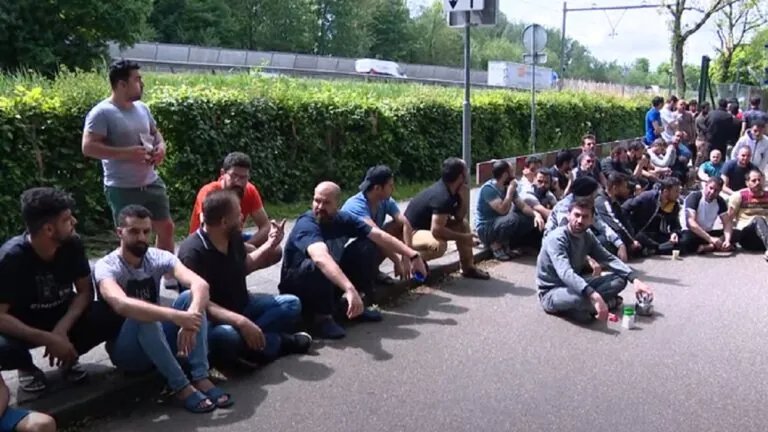
The family argued that the distance between Tholen and Rotterdam was too great to allow them to attend regular treatments without stress. The COA disagreed, pointing out that the apartment was within 50 kilometers of the hospital as the crow flies – precisely the maximum distance the authority considers acceptable.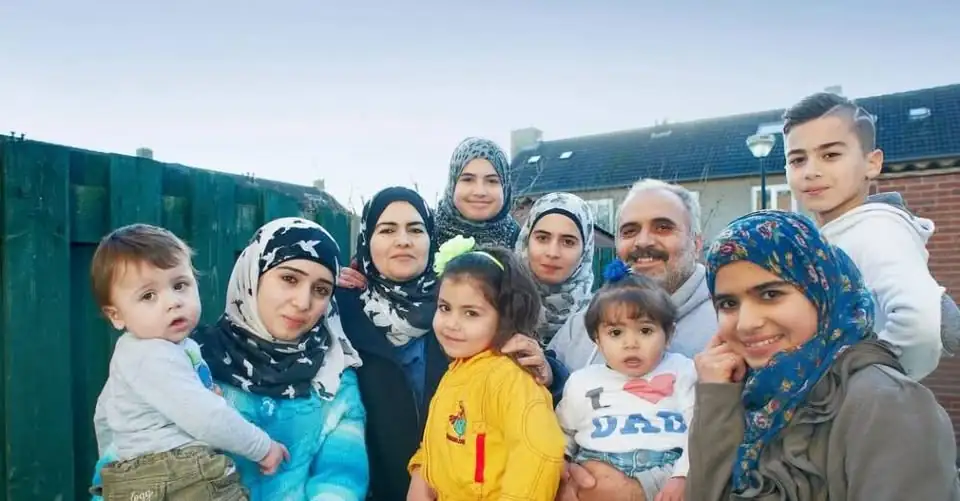
Communication problems and concerns
The family's lawyer pointed out that the entire situation was exacerbated by communication barriers . The father is illiterate and speaks neither Dutch nor English. As a result, much of the information received by the family was unclear or misleading.
What makes this particularly dramatic is that the court could grant the eviction order. In that case, the family with eight minor children would literally be on the street . It is also unclear whether the family can stay together or whether they face separation if the COA offers alternative accommodation.
Continued on the next page
A case with far-reaching implications
For the COA, this is an unprecedented case . The authority has never before filed an eviction lawsuit against a recognized refugee family in the Netherlands. Consequently, the case is receiving considerable attention – both in the media and in society.
This case raises fundamental questions:
How far must recognized refugee families comply with the requirements of the authorities?
What role do medical and family circumstances play in the allocation of housing?
And: How can we ensure that people who are linguistically or educationally disadvantaged truly understand their rights and obligations?
Continued on the next page
Conclusion
The situation in Almelo exemplifies how complex the accommodation of refugees can be in practice. On the one hand, there is the COA (Central Office for Refugee Affairs), which operates according to strict rules and wants to prevent families from unilaterally rejecting housing offers. On the other hand, there is a large family who feel overwhelmed by the distance to the hospital, and whose communication problems further exacerbate the situation.
Whether the court grants the eviction request or finds a solution in the children's best interests remains to be seen. What is clear is that this case is being perceived as a precedent far beyond Almelo and could influence how similar situations are handled in the future.


0 Comments:
Post a Comment